On 24 May 2025 Kavaken flagged anomalous heat behavior in a wind turbine's generator windings, developing with a rise in the generator cooling air temperature. No alarm was active. A month later the site team linked the increase to above-seasonal air temperatures and long production hours, and chose to keep watching. On 5 July SCADA reacted with cooling air overtemperature warnings, a stop and a 2.8-hour power limitation. In August the site team traced the rise to a drop in generator cooling fan performance and carried out fan replacement and maintenance. By January 2026 the anomaly had disappeared from the signals.
Weather or equipment
The same temperature rise had two explanations, two months apart.
Both explanations fit a summer rise in cooling air temperature. Only the second one stopped the trend.
227 days, step by step
KavakenSite teamSignal
- Day 0 · 24 May 2025 · Kavaken
Kavaken flags generator winding heat anomaly
Kavaken detected anomalous behavior in the generator windings heat characteristics, with an upward trend tied to the generator cooling air temperature. The risk was rated low and no SCADA alarm was active.
Flag log, Kavaken (translated): An anomaly developing with the rise in generator cooling air temperature was observed.
- Day 31 · 24 Jun 2025 · Site team
Site links the rise to hot weather
The site team put the increase down to above-seasonal air temperatures and long production hours. They kept the issue under investigation, with maintenance to be planned if the rise continued.
Flag log, site team (translated): Some increase was seen due to above-seasonal air temperatures and long production periods. It is being examined; if it continues, maintenance will be planned.
- Day 42 · 5 Jul 2025 · Signal
SCADA warns, stops and limits power
Two generator cooling air overtemperature warnings came first. Later that day the same condition stopped the turbine for 3 minutes (94 kWh lost) and then triggered a power limitation of 2.8 hours, with an estimated loss of about 1,075 kWh.
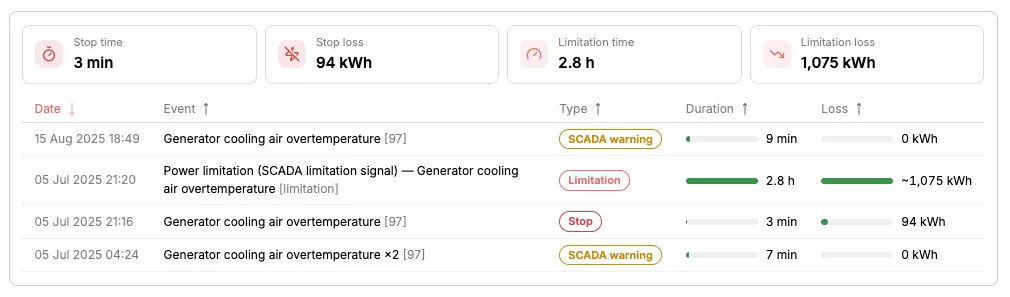
Figure 1. SCADA events for generator cooling air overtemperature: two warnings, a 3-minute stop and a 2.8-hour power limitation on 5 July 2025, and a further 9-minute warning on 15 August. - Day 83 · 15 Aug 2025 · Signal
Another cooling air overtemperature warning
SCADA raised a further generator cooling air overtemperature warning lasting 9 minutes, with no production loss.
- Day 86 · 18 Aug 2025 · Site team · Fix
Cooling fan found weak and replaced
The site team identified a drop in generator cooling fan performance as the cause of the temperature rise. Fan replacement and maintenance were carried out.
Flag log, site team (translated): Temperature increase due to a drop in generator cooling fan performance. Fan replacement and maintenance are being carried out.
- Day 227 · 6 Jan 2026 · Kavaken
Anomaly gone from the signals
Kavaken reviewed the signals after the interventions and confirmed that the anomaly had disappeared.
Flag log, Kavaken (translated): After the interventions, the anomaly is seen to have disappeared from the signals.
Why it stayed hidden
When Kavaken raised the flag, the cooling air temperature was rising but had not reached any SCADA limit, so no warning or stop forced a decision. The rise came in a season of above-normal air temperatures and long production hours, which gave it a plausible, harmless explanation. Only on 5 July did the temperature cross the overtemperature thresholds, and by then the turbine was stopping and limiting power.
The outcome
After the cooling fan replacement and maintenance, the generator cooling air overtemperature events stopped appearing. On 6 January 2026 Kavaken confirmed that the anomaly had disappeared from the signals. The client rated Kavaken's role as helpful.
The stop records also show generator bearing flushing in September 2025. That was separate work and not part of the fix for this issue.
- Production
- 50 MWh
- Financial
- USD 11,000
- CO2
- 30 t
Avoided-loss potential: Kavaken's estimate of the loss that the early finding prevented. It is not a realized saving.
Takeaway
A summer rise in generator cooling air temperature can be the weather or a cooling fan losing performance. Checking the fan when the trend first appears can come before SCADA starts stopping or limiting the turbine.